Wool, bedding, and textile care
Choosing a Natural Mattress Layer: Fit, Loft, and Care
A mattress layer can change the feel of a bed without replacing the mattress. The right choice depends on what the bed needs: a little cushioning, a different surface texture, or a more breathable layer between sleeper and mattress. Fit, loft, construction, and care all matter—and a topper can soften a surface, but it cannot repair a mattress that no longer supports you.
Published October 24, 2026
A small change with a noticeable effect
A mattress is not the whole sleep surface. Sheets, protectors, blankets, and toppers each shape the way a bed feels and responds. A mattress layer is a practical way to adjust that experience without replacing the bed beneath it. It may add a modest cushion, alter the texture at the surface, or introduce a different fiber against the body.
That apparent simplicity can make choosing one seem easier than it is. “Natural” describes a broad family of materials, not a single performance. Wool, cotton, latex, and other fibers have distinct structures and care requirements. Even within wool options, a quilted wool mattress topper differs from a flexible fleece layer or a wool-filled pad. Thickness alone does not tell the whole story: how the fill is secured, what the cover is made of, and whether the layer fits the mattress all influence the result.
The first question, then, is not which material sounds most appealing. It is what the existing bed is missing. If the mattress feels broadly supportive but slightly firm, a surface layer may help. If it sags, dips, or causes persistent discomfort, adding loft is unlikely to solve the underlying problem. A topper should refine a bed’s feel, not be asked to rebuild its support system.
Start with the mattress, not the topper
Before comparing materials, take stock of the mattress itself. Lie in your usual sleeping position and notice where the surface feels uncomfortable. Is the issue a hard, unyielding feel at the shoulder or hip? Does the bed feel too warm? Is there a clear dip that remains when nobody is lying on it? These are different problems, and a mattress layer will not address all of them in the same way.
A relatively even, stable mattress can often benefit from a thin comfort layer. A worn-out or visibly sagging mattress is another matter. Extra softness may briefly disguise a hard spot, but it can also make the bed feel less stable. If the mattress has lost its shape, a topper generally cannot restore its original support or correct unevenness underneath.
It is also worth checking the bed’s existing layers. A thick mattress protector, padded cover, or already-plush surface may change how an additional topper feels. The combined stack can become too soft, too warm, or difficult to keep in place. Consider how the fitted sheet will accommodate the extra depth, too: sheets that fit the mattress alone may pull loose or strain at the corners when the bed is made up.
- Identify the goal. Decide whether you want a softer surface, a different texture, or an extra breathable layer.
- Check mattress condition. A topper is not a substitute for adequate, even support.
- Account for existing bedding. Protectors and padded covers already affect loft and feel.
- Measure the full setup. Include mattress depth and consider sheet-pocket capacity.
Loft: how much height is helpful?
Loft is the thickness or apparent height a layer adds to the bed. It is tempting to assume that more loft means more comfort, but the relationship is not that simple. A thin layer may be enough to soften the first impression of a firm mattress. A thicker, plusher layer may create a more pronounced cushioned feel, yet can change how deeply the body settles into the sleep surface.
For side sleepers, a little extra cushioning at the shoulder and hip can feel welcome, depending on the mattress and individual preference. Back and stomach sleepers may prefer a more restrained change, since excessive softness can alter the feeling of alignment. These are not strict rules: body shape, mattress construction, and personal comfort all play a role. The useful principle is to make the smallest change likely to address the problem, rather than treating maximum thickness as a default.
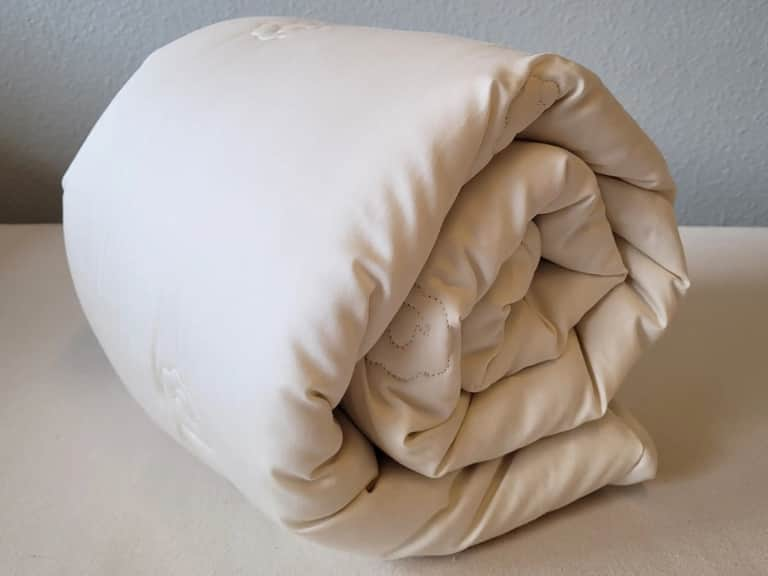
Wool toppers often use a quilted construction, with batting held in place by stitching or tufting. That structure can distribute fill across the surface and limit shifting. Some designs provide a modest, even layer; others offer more loft. A flexible fleece layer, by contrast, may feel closer to a soft textile laid over the mattress than to a thick, pillowy pad. The two are both mattress layers, but they change the bed in different ways.
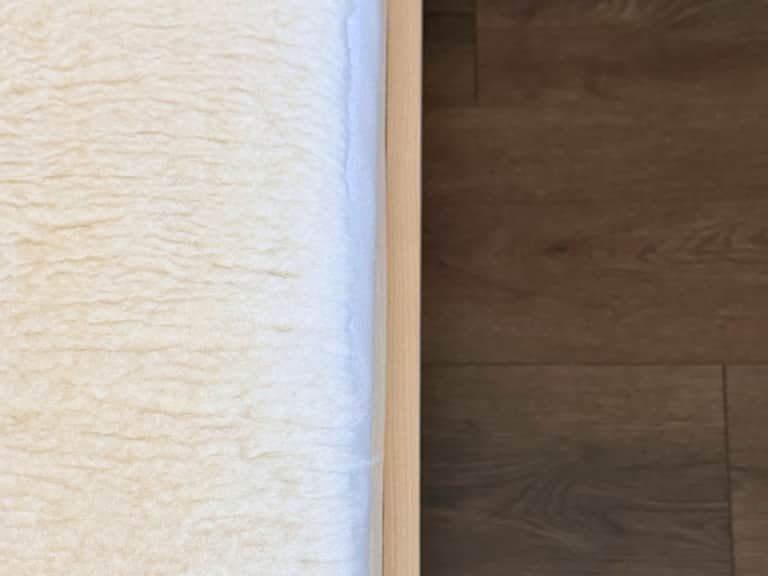
As one example of a shallow, flexible wool surface, the Happy Lamb Fleece is described as approximately one inch deep, with Premium Eco Wool woven into an organic cotton knit backing. That kind of construction is useful to understand when comparing options: the description points to a fabric-like fleece layer, rather than a deeply lofted quilted topper. Whether it suits a particular bed depends on the sleeper’s preference and the mattress below it.
When evaluating loft, look for clear information about depth and construction. A label such as “plush” or “cushioned” may communicate a general impression, but it does not replace measurements or a description of how the fill is held in place. If a specification is missing, ask how thick the layer is and whether that measurement describes the material alone or its finished, compressed profile.
What wool brings to a mattress layer
Wool has a long place in bedding and textiles because its fibers can trap air while also managing moisture. In a mattress layer, that structure can contribute warmth without requiring a dense, heavy surface. Wool is often described as breathable and temperature regulating; in practical terms, the feel will still depend on the fill amount, cover fabric, room conditions, and the person sleeping on it. No fiber guarantees that every sleeper will feel cool or comfortable in every climate.
The cover matters as much as the filling. Wool batting enclosed in cotton has a different surface feel from wool woven into a knit backing. Cotton may give the layer a smooth, familiar hand, while knit construction can allow more flexibility. Quilting and tufting also influence how evenly the fill sits and how the layer responds when it is handled or used over time.
Material claims deserve careful reading. “Natural,” “organic,” and “certified” are not interchangeable terms. A wool filling may be described as natural without being certified organic. A certification, when present, should name the standard and clarify which components it covers. A finished textile can contain several materials—wool filling, cotton cover, thread, elastic, or backing—so it helps to determine whether a stated certification applies to the wool, the fabric, the processing, or the product as a whole.
That distinction is useful beyond wool. A mattress layer made with a natural fiber is not automatically easier to wash, hypoallergenic for every person, or environmentally preferable in every respect. Specific sourcing, processing, durability, and end-of-life considerations matter. Reading the full material description is more informative than relying on a broad adjective.
Construction tells a second story
Fiber content explains what a layer is made from; construction explains how it is likely to behave. In a quilted topper, stitching creates sections that help hold the batting in place. Hand-tufting can anchor fill at intervals, while perimeter stitching secures the outer edge. These details can help a layer retain a more even profile, though no construction eliminates normal compression from use.
Fleece-style layers are built differently. Wool attached or woven into a backing may create a flexible surface that is easier to fold or move than a structured quilted pad. Neither format is universally superior. The better match is the one that suits the desired feel, the mattress dimensions, and the care routine a household can realistically maintain.
Fit begins with the actual dimensions of the mattress, not just its familiar size name. Twin, queen, and king labels can hide variations in length, width, and depth. Measure the mattress at its widest and longest points, and include any existing protector that will remain underneath the topper. For a design with corner straps, check whether the straps can reach around the full mattress-and-layer combination without pulling tight. For an unsecured layer, consider whether its surface and weight are likely to keep it in place under regular movement.
Small mismatches can become daily irritations. A topper that is too narrow may leave a noticeable ridge at the sides. One that is too long may bunch at the head or foot. A layer that shifts can disrupt a smooth sheet surface. If the mattress has an unusual depth or shape, verify that the product is intended to fit those proportions rather than assuming a standard size will be exact.
Care begins before the first wash
Care instructions are part of the choice, not a footnote to consult after a spill. Natural fibers can respond poorly to excessive heat, harsh agitation, or inappropriate detergent. Some mattress layers are designed for spot cleaning and airing, not routine machine washing. Others may be washable under narrow conditions, such as cold water and a soak-and-spin cycle without a standard agitation cycle.
A wool topper should never be assumed to be machine washable merely because another wool bedding item can be washed. Construction changes the risks: batting can shift, felt, or clump if it is agitated or dried incorrectly. Before purchase or use, read the care label and any maker’s instructions for the exact item. If guidance is unclear, seek clarification rather than testing an uncertain method on a full-size layer.
For layers that call for spot cleaning, respond to small spills promptly with the least moisture needed. Avoid soaking the filling. Use only care products permitted by the instructions, and allow the layer to dry completely before putting it back on the bed. Periodic airing or sunning may help refresh some wool bedding, but follow the product’s guidance about exposure and duration; direct heat or prolonged sunlight can be unsuitable for certain fabrics and finishes.
Routine protection can reduce the need for washing. A breathable protector and clean sheets create barriers against skin oils, dust, and everyday spills. Regularly airing the bedding, keeping the bedroom dry, and dealing with stains early are low-effort habits that may help preserve the loft and surface of a mattress layer. For long-term storage, make sure the textile is clean and thoroughly dry, then store it in a clean, sealed container or bag that helps protect it from pests and moisture.
A practical comparison checklist
Product descriptions can be dense with material names and construction details. A short, consistent checklist makes comparison easier and keeps attention on the essentials rather than on a single headline claim.
- Purpose: Does the layer address a surface-feel issue, or are you hoping it will correct a mattress support problem?
- Depth and loft: Is the finished thickness stated, and does it match the degree of change you want?
- Materials: What makes up the filling, cover, backing, and any other components?
- Construction: Is it quilted, tufted, or woven into a flexible backing? How is the fill secured?
- Dimensions: Does the layer match the mattress’s measured length, width, and depth?
- Stability: Are there straps or other features that help keep it in place?
- Care: Is spot cleaning required? Can it be washed, and under exactly what conditions?
- Certification: If a certification is claimed, which materials or stages does it cover?
Keeping these answers together can reveal differences that a product name or a general description may obscure. One wool layer might be washable, another might require spot cleaning, and a third might be intended for occasional airing. Those distinctions influence everyday use as much as the initial feel.
A note on sleep surfaces for children
Mattress layers used in a child’s sleep space require particular care in choosing and fitting them. Follow the mattress and product instructions, and consult current safe-sleep guidance from appropriate health authorities for infants. A natural material or organic certification does not, by itself, establish that a particular layer is suitable for every age or sleep setup. Fit, intended use, and safety instructions must take precedence over assumptions about fiber properties.
For any child’s bedding, check that the product is designed for the relevant mattress and age group, and follow its care and use directions exactly. If a layer is intended for an adult bed, that does not make it appropriate for a crib. Clear product specifications and safety guidance matter more than a general promise of comfort.
Make the bed change deliberately
A topper is most useful when it answers a specific need. If the mattress remains supportive and the surface feels a little too firm, a modest natural layer may change the first impression of the bed. If overheating is the concern, consider the whole sleep system—mattress, protector, sheets, blankets, and bedroom conditions—rather than expecting one textile to solve it alone. If the bed sags, address the mattress rather than adding more loft above it.
Measure before choosing, compare construction rather than relying on thickness alone, and treat care instructions as part of the product’s everyday reality. A carefully fitted layer with a manageable maintenance routine is more likely to remain useful than one selected only for its softness or material label.
Natural mattress layers are not magic. They are textiles, shaped by fiber, structure, and use. Their appeal lies in the possibility of making a considered adjustment: a little more cushion, a breathable surface, a better match between the bed and the sleeper. The best choice is not necessarily the thickest or the most elaborately described. It is the one that fits the mattress, serves a clear purpose, and can be cared for in a way that preserves its feel over time.