Textiles & Care
Inside Wool Comforters: Quilting, Airing, and Everyday Care
A wool comforter is more than a layer of warmth. Its quilting, ties, cover and care routine all shape how it feels over time. Knowing what those details do can help you preserve the comforter without turning ordinary upkeep into a complicated ritual.
Published November 26, 2026
Lift a wool comforter and the first impression is often reassuringly substantial: a soft shell, a supple layer of batting, and a warmth that feels different from the sharp, trapped heat some sleepers associate with heavier synthetic fills. But the comforter’s performance is not just a story about wool. It is also a story about construction—about how that fiber is held in place, how the layers move, and how the whole piece is treated between washes.
Quilting and hand-tufting are two common ways of stabilizing wool batting. They help limit shifting and bunching, though they do not make every comforter behave identically. Fill weight, stitch pattern, shell fabric and the maker’s assembly method all matter. Meanwhile, routine care is usually less dramatic than people expect: protect the comforter, air it periodically, address small marks promptly, and follow the instructions for that particular item before washing it.
That last point deserves emphasis. “Wool comforter” is a description of a material, not a universal laundry setting. Some makers permit carefully controlled washing; others advise spot cleaning and airing. Even two comforters made with similar fibers may have different care requirements because of their fabric, construction or finishing. The label, not a general rule about wool, is the final authority.
What happens inside a quilted comforter?
Wool batting is a layer of fiber arranged to provide loft and insulation. In a comforter, that layer sits between fabric panels. If left entirely unsecured, the fill could shift with handling and use, leaving some areas denser than others and other areas comparatively thin. Construction details are meant to reduce that movement and help warmth stay more evenly distributed.
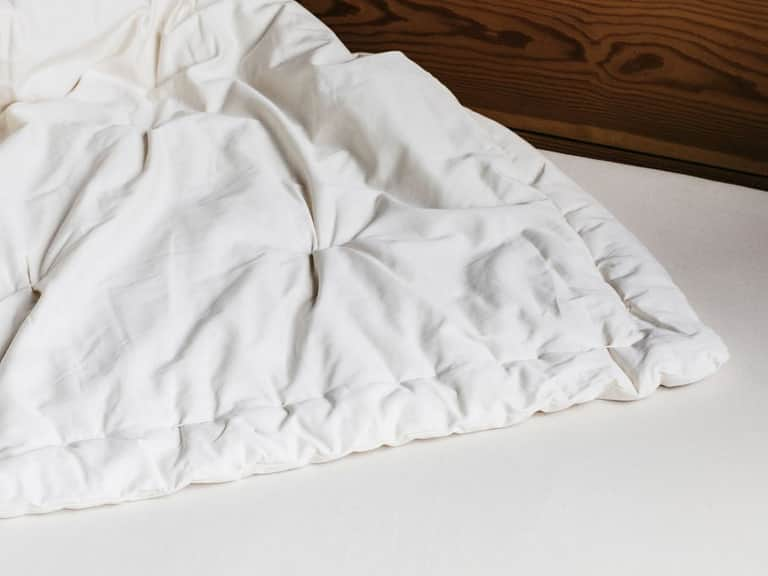
Quilting joins the fabric layers in a pattern of stitches. Those lines create sections or channels that hold the batting in place. The pattern can affect the way a comforter flexes and drapes, as well as how the surface looks. A closer pattern may create more points of restraint; a wider arrangement may leave larger areas between stitch lines. Neither description alone establishes quality. The fiber, stitch execution and overall design work together.
In a properly made comforter, the purpose is practical: to help the fill remain where it belongs during ordinary use. Quilting does not mean that a comforter will never settle. Fibers naturally respond to compression, movement and time. It does mean the batting has defined anchor points, which may help maintain a more consistent layer than a construction with no internal restraint.
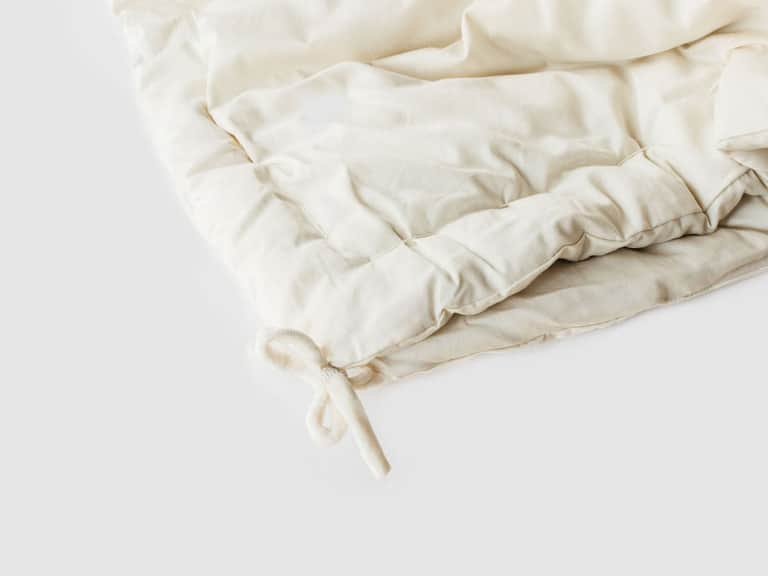
Some wool comforters also use perimeter stitching. This reinforces the outer edge, where the layers meet and where bedding tends to be handled most often. Corner ties or loops may be added so the comforter can be secured inside a duvet cover. These features do not alter the wool itself, but they can make the bed easier to manage and reduce the chance of the insert sliding around inside its cover.
Hand-tufting: small anchors, different character
Hand-tufting is another method used to restrain batting. A thread or tie passes through the layers at intervals and is fastened, creating individual anchor points. It is not the same as sewing an all-over grid of quilting lines, and the resulting surface may have a more tactile, less uniform appearance. The method is intended to help keep the fill from migrating, not to make the comforter rigid.
Tufting can be useful in designs where the maker wants to secure a deeper or more flexible layer of wool without stitching a dense pattern across the full surface. A hand-tufted comforter may still shift or compress gradually; no construction can eliminate the effects of years of use. But the anchor points help organize the fill and limit large-scale movement.
One example is the All-Natural Dual-Weight Comforter, which uses hand-tufted wool batting beneath an organic cotton sateen cover, along with perimeter stitching and corner ties. Its two sides offer different wool weights, a design intended to give sleepers distinct warmth options within one comforter. Its care instructions also illustrate why construction and maintenance belong in the same conversation: spot cleaning is suggested, while any permitted machine care is restricted to cold water and soak-and-spin cycles, with no standard wash cycle or machine drying.
That example should not be treated as a template for every wool comforter. The right washing method depends on the specific item. Tufting does not automatically mean “washable,” and quilting does not automatically mean “dry clean only.” Check the product’s own label or care information, especially before introducing water, agitation or heat.
Why wool may feel warm without feeling sealed in
Wool is valued in bedding for its capacity to insulate while also managing moisture. Rather than simply reflecting warmth back at the sleeper, the fiber can absorb water vapor and release it as conditions change. The sensation of comfort, however, is never produced by fiber alone. Room temperature, pajamas, mattress materials, humidity, the comforter’s fill weight and personal preference all shape the experience.
That is why a comforter described as “all-season” is not a promise that it will suit every person in every climate. It is a broad description, not a measurement of how warm an individual will feel. Lightweight and medium-weight constructions provide different amounts of insulation. A layered design may offer more flexibility, while a single fixed-weight comforter offers a simpler arrangement. In a shared bed, separate warmth preferences can also influence which construction feels practical.
For a wool comforter, quilting and tufting can support consistency by keeping the batting arranged across the surface. They do not determine the comfort level on their own. A comforter with a denser fill may feel warmer regardless of its stitch pattern, while a lighter fill may feel more breathable under the same room conditions. Reading the stated fill weight and care details can be more informative than relying on a single construction term.
It is also sensible to treat claims about natural fibers with care. Wool’s properties may contribute to comfort, but no blanket can guarantee a particular sleep outcome or replace attention to individual needs. People who are sensitive to particular fibers, finishes or household allergens should review the materials and seek suitable professional guidance if they have a medical concern.
Airing: the quiet workhorse of wool comforter care
Between washes, air can do useful work. Bedding collects warmth, moisture and everyday odors during use. Removing the duvet cover and allowing a comforter to air gives that accumulated humidity a chance to dissipate. It is a low-effort maintenance step, and for many wool comforters it is preferable to washing frequently—particularly when the maker cautions that water or agitation could disturb the batting.
Choose a dry, well-ventilated place. A broad, clean surface or a sturdy line can work, provided the comforter is supported so its weight does not pull unevenly on one section. If hanging it, arrange it carefully rather than leaving a heavy fold draped over a narrow rail for an extended period. Gentle handling is the theme: lift and redistribute the fabric instead of tugging at the shell or pulling on individual tufts.
Some care instructions recommend outdoor airing or exposure to sunlight. Others simply advise airing the comforter, without requiring direct sun. Follow the maker’s direction. Sunlight can help freshen textiles, but intense or prolonged exposure may affect colors and fibers, especially in a shell that is dyed or otherwise sensitive. Avoid putting a damp comforter away; allow it to dry thoroughly before making the bed or storing it.
Regular airing is not a substitute for cleaning a spill, nor is it a way to correct structural damage. It is routine care: a chance to refresh the textile and let moisture escape. A gentle shake or a careful lift-and-settle motion can also help restore the comforter’s surface after use. Avoid vigorous beating, which may stress seams and create unnecessary strain on the fill.
The duvet cover: a first line of defense
A duvet cover takes much of the daily contact that would otherwise reach the comforter. It can collect skin oils, dust and minor spills, and it is generally easier to remove and launder than a filled bed layer. For that reason, many makers recommend using one. Corner ties or loops can help keep the insert aligned within it, preventing the familiar problem of a comforter bunching toward one end.
Choose a cover that fits the comforter without forcing it into a tight enclosure. A cover that is too small may compress the loft or strain the seams; one that is much too large can allow the insert to drift. Secure the ties according to the cover’s design, and check the corners after laundering the cover. A few minutes of adjustment can prevent a nightly tug-of-war.
Not every comforter is intended to be used only inside a cover, and not every shell has the same cleaning requirements. A duvet cover reduces the need for frequent cleaning, but it does not make the insert immune to stains or moisture. Keep the care instructions accessible, and clean the outer cover according to its own label rather than assuming it shares the insert’s requirements.
Spot cleaning without soaking the fill
For a small mark, begin with the least aggressive method allowed by the manufacturer. Blot fresh moisture with a clean, absorbent cloth; do not rub hard, which may spread the stain or rough up the shell. If the instructions permit a mild detergent, use a small amount and test cautiously in an inconspicuous area when appropriate. Apply moisture sparingly and keep it localized.
The aim is to clean the cover without saturating the wool batting beneath it. Water trapped inside a thick textile can take a long time to dry, and careless handling may distort the fill or encourage an unpleasant odor. After spot cleaning, let the area dry completely in a well-ventilated place before replacing the duvet cover. If the spill is large, oily or persistent, consult the maker rather than escalating with stronger chemicals or more water.
Avoid bleach, harsh stain removers, strong heat and unapproved solvents. They can damage fibers, change the shell’s feel or interfere with finishes. “Natural” does not mean indestructible, and a detergent advertised as gentle is not automatically suitable for every wool textile. The label is more useful than a broad claim on a bottle.
Washing is a case-by-case decision
One of the most persistent myths about wool bedding is that all wool must be treated exactly alike. In reality, washing advice varies. Some comforters are designed for limited machine care under precise conditions; others should not be washed at home. Water temperature, agitation, spin speed, drying method and the stability of the shell and fill all matter.
When a maker permits machine washing, follow the stated cycle and temperature precisely. “Gentle” is not a license to improvise if the instructions specify soak-and-spin only, or if they prohibit agitation and spin. Do not wring a wet comforter: its weight can place stress on seams and internal anchors. Support it evenly when moving it, and avoid lifting it by one corner.
Drying deserves the same caution. Some care labels allow low-heat tumble drying; others prohibit dryers and call for air drying. A comforter that feels dry on the surface may still hold moisture inside. Follow the maker’s instructions and allow sufficient drying time. Never assume that a familiar laundry routine is safe simply because it has worked for another wool item.
Professional cleaning may be advised for a major stain or for a comforter whose label rules out home washing. Ask the cleaner whether they can follow the maker’s specified method. If a comforter has an unusual construction, delicate shell or organic certification, it may be useful to provide the care information directly rather than relying on a generic assumption about wool.
Settling is not always a fault
With regular use, wool fibers can compress and settle. A new comforter may feel different after it has spent time on the bed, and a quilted or tufted piece may develop subtle changes in loft. Some of this is ordinary wear. The goal of construction is to manage the fill, not to freeze it in its original form forever.
Rotate the comforter from time to time if its shape and design allow it, so that one area is not consistently subjected to the same pressure. Avoid folding it tightly in the same place every day. When storing it for a season, make sure it is clean and fully dry, then choose a breathable storage bag or closet space. A sealed container may be convenient, but long-term storage should not trap residual moisture.
Periodic inspection can catch small problems early. Look at the seams, perimeter stitching, corner ties and tuft points. If a thread loosens, do not pull it; contact the maker or consult a textile repair professional. A small repair may prevent further movement of the layers. If the fill shifts dramatically, a seam opens, or a persistent odor remains after airing, seek advice before attempting a home fix.
A practical care rhythm
Good wool comforter care is less about constant intervention than about a few steady habits. Use a cover when the maker recommends one. Air the comforter periodically, especially after a warm or humid stretch. Spot clean small marks promptly but gently. Wash only when the care instructions allow it, and avoid treating machine washing as the default response to ordinary use.
- Before first use: Read the care label and identify whether the insert can be washed, spot cleaned or professionally cleaned.
- During regular use: Use a duvet cover when suitable, and secure its ties to the comforter’s corner loops or ties.
- When refreshing: Air the comforter in a clean, dry, ventilated place and follow any guidance about sunlight.
- After a spill: Blot, treat only as directed and allow the area to dry fully.
- Before storage: Confirm that the comforter is clean and completely dry, then store it without excessive compression.
These steps may sound modest. That is the point. A comforter is designed to be used, and its care should not become an elaborate project. Respecting the construction and the maker’s guidance is usually more effective than trying to wash away every trace of ordinary life.
The details that make a difference
When comparing wool comforters, construction terms are useful starting points, not final verdicts. Quilting describes how the layers are stitched together; hand-tufting describes the use of spaced anchors through the fill. Perimeter stitching reinforces the edge. Corner ties help secure an insert in a cover. Each answers a different practical question about how the comforter is assembled and handled.
Then come the material details: the type and weight of wool, the shell fabric, the presence of multiple layers and any certification claims. Look for clear, specific information rather than relying on broad labels. If care guidance is missing or ambiguous, ask the maker before purchase or before cleaning. A well-documented care plan is part of understanding the textile, not an administrative footnote.
Wool’s appeal is partly its balance: warmth without a heavy, sealed feeling for many sleepers, resilience under use, and the possibility of long service when cared for appropriately. Yet no single fiber or stitch pattern can promise universal comfort. The right choice is the one that fits the sleeper, the room and the routine—and the one whose care instructions can realistically be followed.
Quilting and hand-tufting may be nearly invisible once the bed is made. Their influence is not. They help determine how a wool comforter holds its shape, how it responds to movement and how it should be handled over time. Add a protective cover, periodic airing and cautious cleaning, and the result is not a bedding layer preserved in stasis, but a useful textile allowed to do its job season after season.